
Tarangire National Park lies south of Masai ecosystem about 139 km from Arusha town through the great northern highway road. The Park covers an area of about 2,642 sq km and it is the fifth largest National Park in Tanzania.
The park drives its name from Tarangire River which runs along the middle of the park & it is a valuable water source for animals throughout the year. The park lies in a tropical semi arid characterized by prolonged dry season lasting up to seven months. The rainfall regime is bi-modal with the short rain fall between November and January and long rains from March through May. Please see our rates for this Day Trip bellow. Also see more of our – Arusha Day Trips & Cultural Tours
VEGETATION
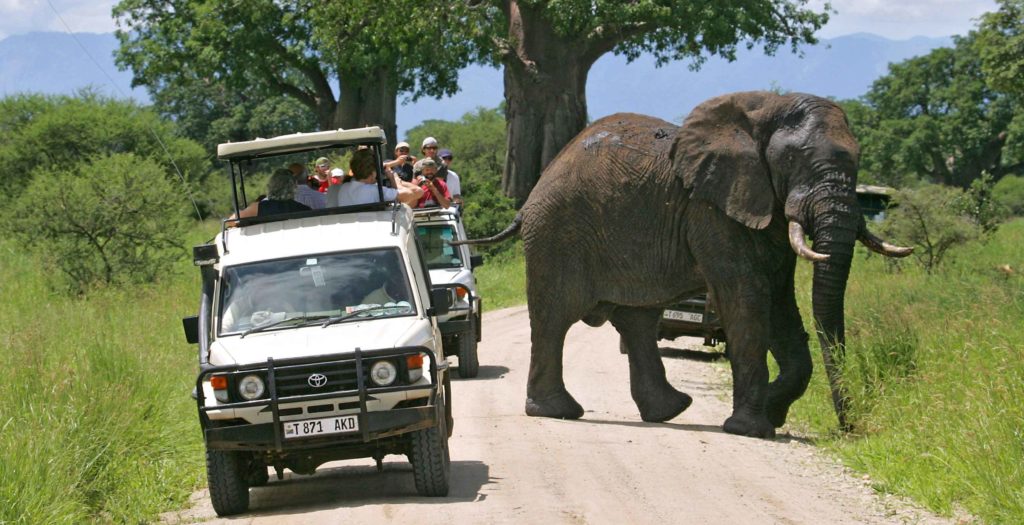
Vegetation at Tarangire National Park is mainly consist of larger open grassland with countless acacia trees, tamarind, sausage trees & Giant African baobab trees dwarfing some animal species that feed beneath it.
WILDLIFE
Tarangire National Park is reputed for its massive herds of elephant entertaining visitors by their habit of browsing & debarking trees. Other animals to be seen include herds of wildebeest, zebra, warthogs, giraffe, gazelles, impala, lion & hyenas, cheetahs & the ever-elusive leopard which sometimes needs trained eye to spot. The three rare species of Great Kudu, Frienged-Eared Oryx & the Ash staling are inhabit this park. The Park is home to thousands of birds, over 400 bird species have been recorded including the rare & migratory one.
Tarangire National Park best time to visit
Yearly around but the period stretches between June to November is the best time for game viewing in Tarangire.
ACCOMMODATION
Accommodation at Tarangire National Park are mainly lodges, tented camps and campsite. Lodges & camps at this area are falling into three categories of budget, mid-range & luxury.
Day trip to Tarangire National Park from Arusha the Tourism capital can easily be arranged & are mostly start in the morning from 8:00 hours with driving time of 2.5 hours. The driving is along The Great Northern Highway & across Masai steppe & many villages, packed lunch should be carried during this trip. Our Northern Tanzania safari packages are mostly include this Park.
Private Day Trip to Tarangire National Park Departing Arusha City at 08:00 Hours.
Price Including VAT:-
For 1 person is $ 435
For 2 to 3 person is $ 265 per person
For 4 to 6 Person is $ 185 per person
Starting & ending in Arusha city Tanzania’s Tourism Capital.
Includes:-
Transportation in clean, well maintained 4WD safari Land Cruise with photographic roof thatch
Service of professional & well experienced English speaking local safari driver guide
Good packed lunch
Mineral water (1.5 l per day per person)
All park fees including VAT
Items not included:
Alcoholic and soft drinks
Visa fees
Tips/gratitude for safari driver guide
All items of a person nature
Travel insurance etc.
Overview & Insight: Day Trip to Tarangire National Park
Tarangire National Park, located in northern Tanzania’s Manyara Region, is a compact yet wildlife-rich gem spanning about 2,850 square kilometers (1,100 square miles). Often called the “home of elephants,” it’s renowned for its massive herds of African bush elephants, ancient baobab trees, and the life-sustaining Tarangire River, which draws thousands of animals during the dry season. As part of Tanzania’s Northern Safari Circuit, it’s an ideal day trip from Arusha (about 120-140 km away), offering a condensed taste of authentic African safari without the multi-day commitment. A day trip typically involves 6-8 hours of game drives, focusing on the park’s savannah plains, swamps, and riverine areas.
While December falls in the short-wet season (November to February), wildlife viewing remains good for resident species and birdwatching, though migratory herds are less concentrated than in the peak dry season (July-October). Expect lush green landscapes, fewer crowds, and potential afternoon showers—perfect for photographers seeking vibrant scenery. Note: Roads can get muddy, so use a 4×4 Safari Lad Cruiser.
Best Time to Visit for a Day Trip
The optimal window for wildlife density is the dry season (June to October), when animals cluster around the river, making sightings easier amid sparser vegetation. For birders, the wet season (November to May) shines with over 550 species, including migrants like the rosy-throated longclaw.
| Season | Months | Wildlife Viewing | Weather | Pros | Cons |
| Dry (Peak) | June-October | Excellent (herds of 300+ elephants, zebras, wildebeest) | Hot/dry (25-30°C/77-86°F), minimal rain | High animal concentrations; clear views | Crowded; dusty roads |
| Short Wet (Good for Day Trips) | November-February | Good (residents + birds) | Warm/mild (20-28°C/68-82°F), occasional showers | Lush scenery; fewer tourists; greener backdrops | Some animals disperse; possible rain delays |
| Long Wet (Low Season) | March-May | Fair (fewer migrants) | Hot/humid (22-30°C/72-86°F), heavy rains | Budget-friendly; bird migration peaks | Muddy tracks; limited visibility |
For your December 2025 trip, aim for early morning starts to beat any rain and maximize daylight.
How to Get There from Arusha
Most day trips start and end in Arusha, the safari gateway. The park is easily accessible, with options suiting different budgets and timelines.
- By Road (Recommended for Day Trips): A scenic 2–3-hour drive (140 km) via the The Great Nortern Highway, turning at Makuyuni Junction. The first 133 km is paved; the last 7 km is gravel but manageable in a 4×4. Private transfers or shared shuttles cost $50-100 USD per person round-trip. Self-drive rentals (e.g., via Self Drive Tanzania) are possible but require a 4×4 and international permit.
- By Air: For speed, fly from Arusha Airport (ARK) to Kuro Airstrip inside the park (20-30 minutes, $150-250 USD one-way via Coastal Aviation or Auric Air). Ideal if combining with Kilimanjaro International Airport (JRO) arrival, just 50 km from Arusha.
Book through local operators like Back to Africa Safaris for seamless logistics, including airport pickups.
Detailed Itinerary for a Full-Day Trip
A standard day trip maximizes game time (6-8 hours in the park) while accounting for travel. Depart early to catch dawn activity; return by dusk. Total cost: $200-400 USD per person (group of 4-6), including transport, fees, guide, meals, and water. Here’s a sample schedule:
| Time | Activity | Details |
| 6:00-7:00 AM | Pickup & Breakfast at your hotel/lodge in Arusha | Collected from your hotel (e.g., Arusha Coffee Lodge or elsewhere). Light packed breakfast box en route. Drive through Masai Steppe—spot Maasai herders and Mount Meru views. |
| 8:00-10:00 AM | Arrival & Morning Game Drive | Enter via Main Gate (pay fees here). Head to Tarangire River for prime sightings: elephant families bathing, zebras grazing. Guide shares insights on baobabs (some 1,000+ years old). |
| 10:00 AM-12:00 PM | Mid-Morning Exploration | Venture to swamps/southern plains. Look for lions in acacias, cheetahs on open grasslands, or pythons near water. Birders: Spot 100+ species like hornbills or lilac-breasted rollers. |
| 12:00-1:00 PM | Picnic Lunch | Relax at a shaded picnic site overlooking the river (e.g., near Silale Swamp). Fresh salads, sandwiches, fruits—operators provide eco-friendly setups. |
| 1:00-4:00 PM | Afternoon Game Drive | Circle back north, focusing on predators (leopards in trees) and antelopes (oryx, gerenuk). Dry-season bonus: Witness “river congregations” of 1,000+ animals. |
| 4:00-6:00 PM | Exit & Return Drive | Last sightings near gate; golden-hour light for photos. Arrive Arusha by 6-7 PM for dinner/relaxation. |
Pro Tip: Customize for interests—add a walking safari (extra fee) or focus on photography hides. For families, request child-friendly pacing.
Wildlife Highlights: What to Expect
Tarangire boasts the highest elephant density in northern Tanzania (up to 300 in a herd), plus the Tarangire Ecosystem’s seasonal migration. December’s green season favors residents and birds over mega-herds, but sightings are still thrilling—expect 70-80% success rate for Big Five (except rhinos).
Mammals (Common to Rare)
| Category | Species | Viewing Notes |
| Icons | African Elephant, Masai Giraffe, Plains Zebra | Abundant; elephants often dust-bathe near river. Herds of 50-200 zebras/giraffes. |
| Plains Game | Wildebeest, Cape Buffalo, Impala, Eland, Warthog | Migratory groups peak dry season; buffaloes in family units. |
| Antelopes | Waterbuck, Dik-dik, Grant’s Gazelle, Oryx (rare), Gerenuk (rare) | Oryx/gerenuk in dry scrub—unique “giraffe-necked” antelope. |
| Predators | Lion (tree-climbing prides), Leopard (rare), Cheetah (rare), Spotted Hyena, African Wild Dog (occasional) | Lions near swamps; hyenas scavenge at dusk. |
| Primates & Small | Olive Baboon, Vervet Monkey, Banded Mongoose | Playful troops in acacias; mongooses in termite mounds. |
Birds (Over 550 Species)
A birder’s paradise—December brings migrants. Highlights: Ostrich (world’s largest), Kori Bustard, Secretary Bird, Eurasian Bee-eater. Use binoculars for riverine spots.
Fun Fact: The park’s red termite mounds (up to 6m tall) house dwarf mongooses and are a quirky photo op.
Practical Information
- What to Bring: Binoculars, camera (long lens), sunscreen/hat (UV intense), insect repellent, light layers (rain jacket for December), snacks, reusable water bottle. Leave drones at home—banned.
- Health & Safety: Yellow fever certificate required if from endemic areas. Malaria prophylaxis advised; no rabies risk from guides. Stick to vehicle paths—guides handle wildlife proximity. Eco-tip: Use “leave no trace” principles.
- Sustainability: Choose operators certified by Tanzania National Parks (TANAPA). Tarangire supports anti-poaching via elephant corridor projects—your visit aids conservation.
Why Choose Tarangire for a Day Trip?
In just 12 hours, you’ll witness nature’s drama—elephant matriarchs leading calves to water, lions lounging in baobab shade—leaving you hooked for longer safaris. It’s less crowded than Serengeti, more diverse than Lake Manyara, and a perfect intro to Tanzania’s wild heart. Safe travels—December’s greenery will make your memories pop! If extending, pair with Ngorongoro (4-hour drive). Contact us for real-time bookings.