
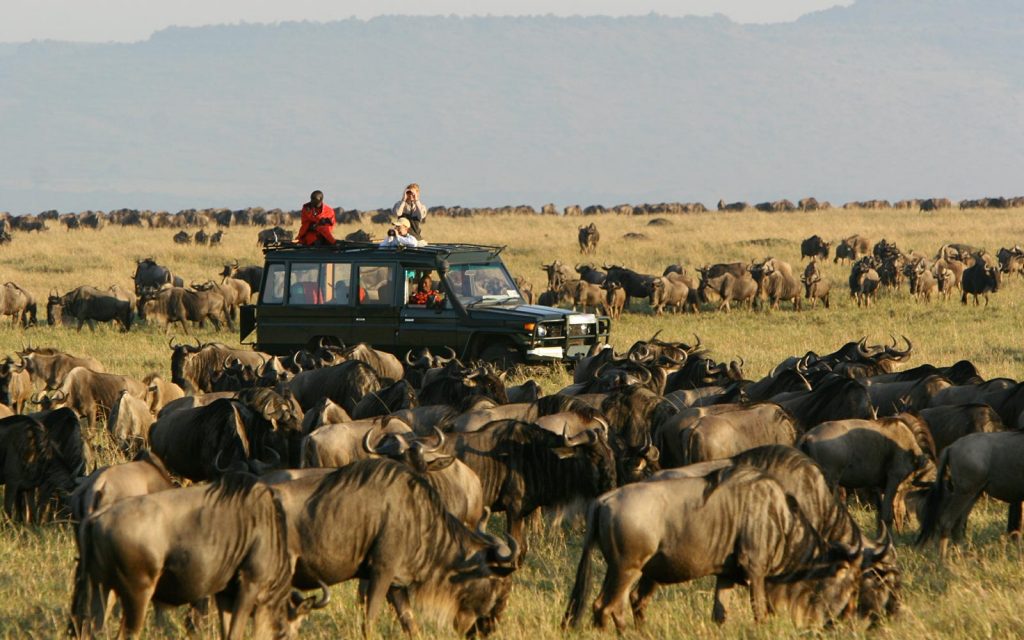
Masai Mara Game Reserve is one of the Kenya’s famous wildlife areas situated at Narok Count adjoining Serengeti National Park on the Northern Tanzania, The name Mara is of Maasai Language (maa) for “spotted” and they use for describing their area when looking at, from a far “Mara”, which was all about the circled savanna of shrubs, trees and cloud shadow that mark the area.
Masai Mara is recognized globally for its remarkable population of lions, leopards and cheetahs, and the annual Great Wildebeest Migration that involves Zebra and Thomson’s gazelle to and from Serengeti National Park in every months of July to October.
The Maasai Mara National Reserve is a part of what we call Serengeti Masai Mara Ecosystem and in Kenya Masai Mara is only a part of the Greater Mara Ecosystem, which combines a group of Ranches. Please see our page 10 Days Kenya and Tanzania Combine Safari for Great Migration
Overview& Insight: Masai Mara Game Reserve
The Masai Mara National Reserve (often spelled Maasai Mara) is one of Africa’s most iconic wildlife destinations, located in southwestern Kenya in Narok County. It covers approximately 1,510 km² (583 square miles) of open savanna grasslands, rolling hills, acacia-dotted landscapes, and riverine forests along the Mara and Talek Rivers.
The reserve is named after the indigenous Maasai people, who refer to it as “The Mara,” and is contiguous with Tanzania’s Serengeti National Park, forming part of the greater Mara-Serengeti ecosystem. This unfenced border allows for free animal movement, making it a hotspot for wildlife viewing.
The reserve is world-famous for the Great Wildebeest Migration, often called the “Greatest Wildlife Show on Earth,” where over 1.5 million wildebeest, accompanied by hundreds of thousands of zebras and gazelles, cross from the Serengeti into the Mara in search of fresh grazing.
Wildlife and the Big Five
The Masai Mara boasts exceptional biodiversity, with high densities of predators and herbivores year-round. It is renowned for the Big Five:
Lion → Prides are frequently spotted; the Mara has one of the highest lion populations in Africa.
Elephant → Large herds roam the plains and rivers.
Buffalo → Massive herds are common.
Leopard → Elusive but regularly seen in trees along rivers.
Rhino → Both black and white rhinos are present, though rarer and more protected.
Other highlights include cheetahs (excellent for high-speed hunt sightings), giraffes, hippos, crocodiles, hyenas, and over 470 bird species. The “Big Nine” expands this to include cheetah, zebra, giraffe, and hippo.
The Great Wildebeest Migration Movement
The annual migration involves millions of animals following rainfall patterns in a circular route.
Key phases in the Mara
July to October — Herds arrive in the Mara; peak drama with river crossings over the Mara River (crocodile ambushes and perilous leaps).
Best viewing: Mid-July to late August/early September for crossings; unpredictable but often intense in August-October.
The migration is a natural event influenced by weather, so timings vary slightly yearly.
Best Time to Visit Masai Mara
Peak season (From July – October) → Ideal for the migration; dry weather, excellent visibility, but crowded and pricier.
Shoulder seasons (June & November) → Fewer crowds, still good migration chances.
Low season (From December- May) → Green landscapes after rains; great for birding and calving season (February for wildebeest births in Serengeti side); resident wildlife always abundant.
Year-round destination, but avoid heavy rains (March-May) for road access.
The Masai People and their Culture
The reserve honors the Maasai, semi-nomadic pastoralists known for their distinctive red shuka clothing, beadwork, and warrior traditions. Many conservancies surrounding the core reserve are Maasai-owned, blending conservation with community benefits (e.g., via tourism revenue). Visitors can experience cultural visits: traditional dances, village tours, and insights into their cattle-herding lifestyle.
Activities and Tips
Game drives (day/night), hot air balloon safaris, walking safaris (in conservancies), cultural visits.
Stay in the core reserve or adjacent private conservancies for fewer vehicles and off-road driving.
Transportation to Masai Mara Game Reserve
The Masai Mara in Kenya is a premier safari destination, famous for the Great Migration and abundant wildlife. Most visitors arrive from Nairobi.
By Air (Recommended for Convenience)
Fly from Nairobi’s Wilson Airport (WIL) to one of the many airstrips in the Mara (e.g., Keekorok, Mara Serena, Ol Kiombo).
Flight time — About 45-60 minutes.
Airlines — Safarilink, Air Kenya, Mombasa Air Safari, and others operate daily scheduled flights.
Cost — One-way fares start around $150-250 (subject to season and booking).
Advantages — Quick, scenic views from above, and lodges often include airstrip transfers. Flights may stop at multiple airstrips, so total time can be up to 1-1.5 hours.
By Road
Drive from Nairobi (about 250-280 km depending on the gate).
Time — 5-6 hours on mostly paved roads (via Narok and Sekenani Gate).
Options — Self-drive (4×4 recommended), private transfer, or join a safari tour/package that includes transport.
Pros — Cheaper and allows stops for views of the Great Rift Valley.
Cons — Can be bumpy in parts, longer travel time.
Many safari packages bundle flights or road transfers with game drives.
 Accommodation Options
Masai Mara Game Reserve offers a range of stays, from luxury tented camps and lodges inside the reserve or private conservancies (better for exclusive game viewing) to mid-range and budget options. Conservancies often allow off-road driving, night drives, and walking safaris.
Luxury Options (Popular for 2026 safaris):
Mahali Mzuri (Sir Richard Branson’s camp) → Stunning views, 12 luxurious tents.
Angama Mara → Iconic location (from Out of Africa film), elevated on the escarpment.
The Ritz-Carlton Masai Mara Safari Camp → Ultra-luxury with modern amenities.
JW Marriott Masai Mara Lodge → 5-star with pool, spa, and prime location.
&Beyond Bateleur Camp → Elegant tents with classic safari vibe.
Fairmont Mara Safari Club → Riverside setting in a conservancy.
Mid-Range & Other Recommendations → Mara Serena Safari Lodge, Governors’ Camp, Offbeat Mara Camp, or eco-friendly options like Emboo River Camp.
Stays typically include meals, game drives, and park fees. Book early for peak season (July-October for the Migration).
For personalized plans, consider consulting Back to Africa Safaris. Safe travels!
The Masai Mara Game Reserve in southwestern Kenya represents the pinnacle of African safari experiences — a vast, unbroken expanse of golden savannas, rolling hills, and riverine forests that teems with unparalleled wildlife density and dramatic natural spectacles.
At its core, the reserve is synonymous with the Great Wildebeest Migration, often hailed as one of the Seven Natural Wonders of the World. Every year, from roughly July to October, over 1.5 million wildebeest, accompanied by hundreds of thousands of zebras and gazelles, undertake a perilous journey from the Serengeti in Tanzania, culminating in thrilling River crossings over the Mara River where crocodiles lie in wait.
This ancient cycle of life and death captures the raw essence of nature’s drama like no other event on Earth.
Beyond the migration, the Masai Mara Game Reserve offers exceptional year-round game viewing. It is renowned for its abundant Big Five (lions, elephants, buffaloes, leopards, and rhinoceros), with particularly high concentrations of predators—prides of lions lounging under acacia trees, cheetahs sprinting across the plains, and elusive leopards in the woodlands. The reserve’s diverse ecosystems support over 95 mammal species and hundreds of birds, making it a biodiversity hotspot.