Best Time for Great Migration Safari, Serengeti Wildebeest Migration Tours
Best time for Great Migration safari depends on what part of this awe-inspiring journey you wish to witness. For dramatic river crossings packed with action and tension, July to September along the Mara River is ideal. If you prefer seeing vast herds calving and predators on the hunt, the lush plains of the southern Serengeti from January to March offer an unforgettable spectacle. No matter when you go, timing your safari to match the migration’s rhythm ensures an extraordinary and deeply moving experience in one of the world’s greatest wildlife adventures.
What is the Great Migration?
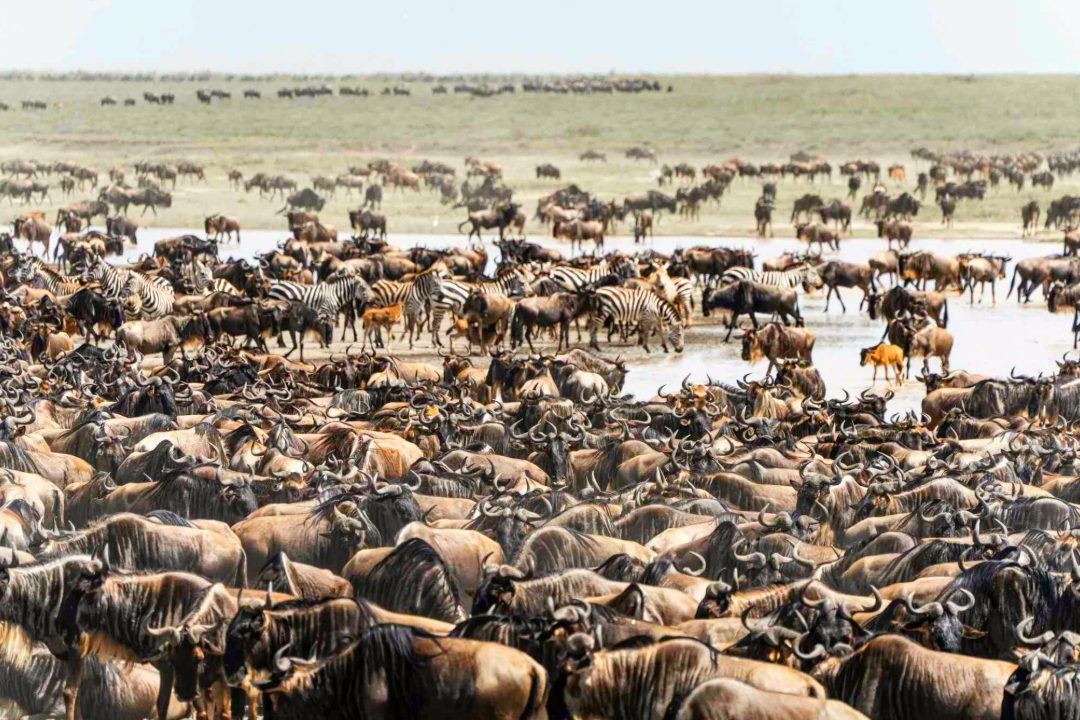
The Great Migration is a yearly journey where more than 2 million wildebeest, along with zebras and gazelles, move across Tanzania’s Serengeti and Kenya’s Masai Mara. They travel to find fresh grass and water, following the rains and must cross dangerous rivers.
Best Time for Great Migration Safari (By Event)
| Period | Location | Highlights |
| December – March | Southern Serengeti (Ndutu Area) | Calving season: Thousands of baby wildebeest are born daily, attracting predators like lions and cheetahs. |
| April – May | Central Serengeti | Herds migrate north. The landscape is lush during the “Green Season,” but rain can make travel muddy. |
| June – July | Western Serengeti (Grumeti River) | Early River crossings at the Grumeti River bring dramatic encounters with crocodiles. |
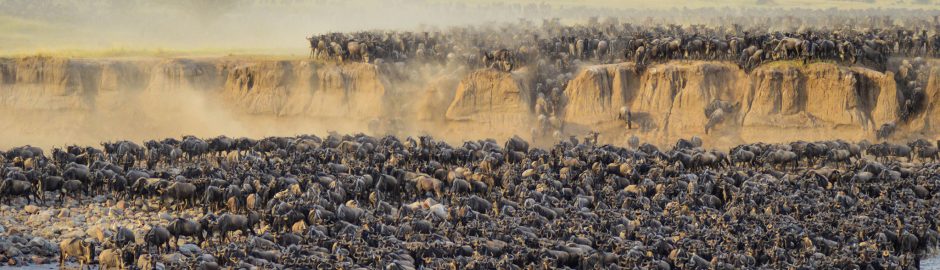
| July – September | Northern Serengeti / Masai Mara | Iconic Mara River crossings — thrilling scenes as wildebeest face off against crocodiles. This is the peak viewing season. |
| October – November | Masai Mara / Heading south | Heading south Herds begin moving back toward the Serengeti with the start of the short rains. Good sightings, though herds are more scattered. |
Absolute Peak Moments
July – September: Experience the iconic and dramatic crossings of the Mara River.
February: Best time to see newborn wildebeest and intense predator action.
Tips for Planning
Book early — lodges fill up quickly during peak river crossing season (July–September).
Each stage of the migration presents a distinct spectacle, from calving season to dramatic river crossings and vibrant, green migrations.
Weather affects travel ease — rainy months (April–May and November) bring fewer crowds but can make logistics more challenging.
Sample Packages for Great Serengeti Wildebeest Migration Safaris
Though most of our packages which include Serengeti can still offer the Wildebeest Migration Safari experience but these one are tattled for the Wildebeest Migration tours:-
6 Days Great Wildebeest Migration Safari
8 Days Serengeti Wildebeest Migration Calving Season
10 Days Affordable Serengeti Wildebeest Migration Package
10 Days Kenya & Tanzania Wildebeest Migration Combined Safari
For more packages please visit our page Tanzania Safari Packages & Prices
The Great Migration is one of nature’s most spectacular events, and timing your safari right is key to witnessing it at its most dramatic. Typically, the best time to experience the Great Migration in the Serengeti and Masai Mara is between July and October, when massive herds cross the Mara River amid thrilling predator encounters. However, depending on what aspect of the migration you wish to see — calving season, river crossings or endless plains filled with wildebeest — different months offer unique experiences. Join us for the adventurous of a life time based on Best Time for Great Migration Safari. Karibu Sana!
Detailed Tips & Advice for Planning Your Safari
- Decide Your Priority Event — River crossings are thrilling but crowded and unpredictable (herds may hesitate days). Calving offers raw life-cycle drama with easier predictions and exclusivity. No “wrong” time—the ecosystem has resident wildlife year-round.
- Book Far in Advance (12–18 months for peak season) — Camps near rivers (e.g., northern Serengeti or Mara conservancies) sell out fast. Mobile/tented camps follow the herds for prime positioning.
- Stay Longer for Better Odds — Spend 7–10+ days. Crossings aren’t daily; patience is key. Combine Tanzania (Serengeti) and Kenya (Masai Mara) for fuller experience (need passport/visa).
- Avoid Crowds — Peak (Jul–Oct) means vehicle queues at crossings in public reserves. Opt for private conservancies (e.g., Mara North, Grumeti) or off-peak (e.g., calving). Northern Serengeti side often quieter than Masai Mara.
- Choose the Right Location/Accommodation:
- River crossings: Northern Serengeti (Kogatende) or Masai Mara (Mara River camps).
- Calving: Ndutu/Southern Serengeti.
- Use experienced operators with real-time herd tracking (e.g., via radios/apps).
- Budget & Practicalities:
- Peak season: Higher prices, dry weather (easier spotting).
- Shoulder/low season: Discounts, lush scenery, but rain/mud.
- Fly-in safaris save time (airstrips near herds).
- Add extras: Hot-air balloon over herds (stunning in Mara); walking safaris in conservancies.
- Be Flexible & Ethical — Weather shifts timings—monitor updates closer to travel. Respect rules: Stay in vehicles, no off-roading near herds. Support responsible operators minimizing disturbance.
Packing Tips for a Great Migration Safari
The Great Migration in the Serengeti (Tanzania) and Masai Mara (Kenya) is an incredible spectacle of millions of wildebeest, zebras, and gazelles moving in search of fresh grass—often featuring dramatic river crossings like those over the Mara River. Game drives typically use open-top 4×4 vehicles for optimal viewing.
Best Time for Great Migration Safari: Packing light is essential due to strict weight limits (usually 15-20 kg/33-44 lbs per person, including carry-on) on internal flights in soft-sided bags only—no hard suitcases or plastic bags (banned in Kenya and Tanzania).
Clothing Essentials
Opt for neutral colors (khaki, beige, olive green, light brown) to blend in and avoid attracting tsetse flies (dark blue/black attracts them; bright colors can spook animals). Layering is key: mornings/evenings are cool (50°F/10°C), days warm (75-85°F/24-30°C).
3-4 lightweight long-sleeve shirts (breathable, quick-dry for sun/insect protection)
3-4 T-shirts or short-sleeve shirts
2-3 convertible pants/shorts (zip-off legs)
1-2 long pants for evenings
Fleece jacket or warm layer for chilly game drives
Lightweight rain jacket/poncho (especially if visiting during shoulder seasons with possible showers)
Underwear and socks (moisture-wicking)
Swimsuit (if your lodge has a pool)
Sleepwear
Avoid camouflage (restricted in some areas), white (shows dirt), and bright colors.
Footwear and Accessories
Comfortable closed-toe walking shoes or lightweight hiking boots (for bush walks if included)
Sandals or flip-flops for camp/lodge
Wide-brimmed hat or cap
Sunglasses (polarized for glare)
Scarf/buff (for dust)
Protection and Health
High-DEET insect repellent (essential for mosquitoes and tsetse flies, especially at dusk)
Sunscreen (high SPF, reef-safe if extending to Zanzibar)
Personal medications + anti-malarials (consult doctor)
Basic first-aid (bandages, antihistamines)
Photography and Viewing
Binoculars (8×42 or 10×42 recommended for distant wildlife)
Camera with zoom lens + extra batteries/memory cards
Power bank (outlets may be limited)
Other Essentials
Soft-sided duffel bag (water-resistant)
Daypack for game drives
Reusable water bottle
Headlamp/flashlight
Travel documents (passport, visas, yellow fever certificate if required)
Snacks (if you have dietary needs)
Pack minimally—most lodges offer laundry service. Focus on versatility and comfort to fully enjoy the migration without distractions! If your trip includes specific seasons or activities (e.g., balloon safari), adjust for extra layers or waterproof gear.10.8sFast.
Best Time for Great Migration Safari in Serengeti Tanzania: The Great Migration is nature’s raw spectacle—unpredictable, emotional, and unforgettable. Tailor to your interests, plan early, and embrace the wild uncertainty!
After going through this page , hopeful you will decide on the Best Time for Great Migration Safari that suite your preferences, ideas & budget: Kariu Tanzania!