
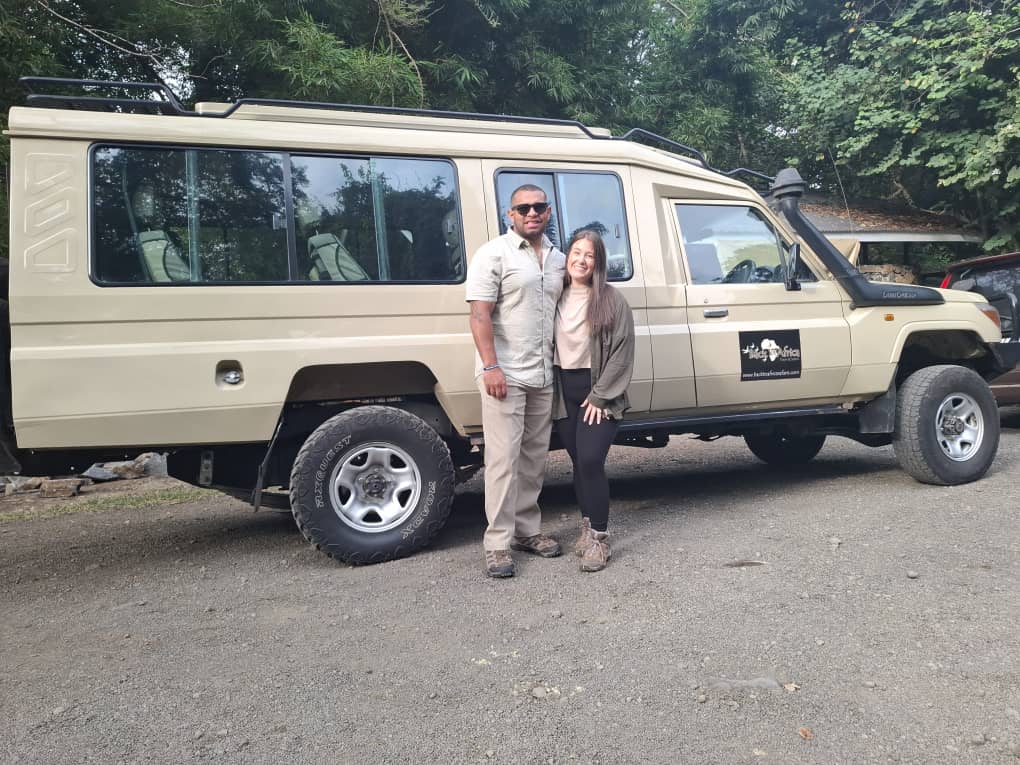
All our Tanzania Safari vehicles are 4WD Land Cruisers which are more comfortable for Tanzania roads and durable than other safari cars.
Tanzania Safari vehicles Features
• Our safari vehicles can carry from 5 up to 7 person
• We assure all our clients window seats with proper seat belts. There are no middle seats
• All our vehicles have cooler boxes/ fridges filled with enough bottles of mineral water
• Most of the vehicles have a power plug for charging cameras or laptop batteries
• Our safari driver guides are well trained and experienced always equipped with reference books for fauna & flora as well as a pair of binoculars. Seat warmers with massaging head rest (not really! Just making sure you were paying attention). After all, this is all about Safaris in Tanzania. Please see our Tanzania safari packages with prices & some photos of our Safari vehicles below:
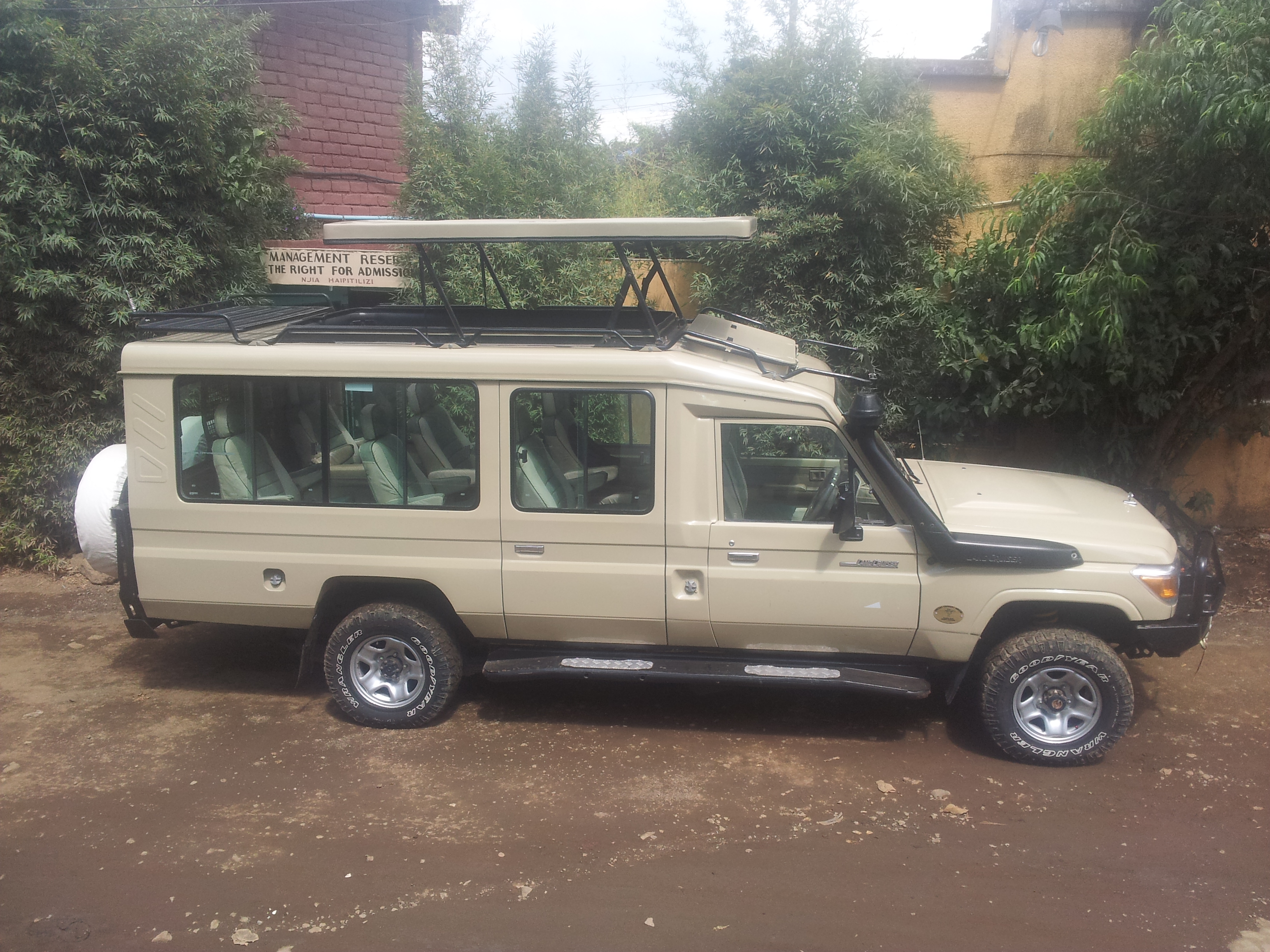
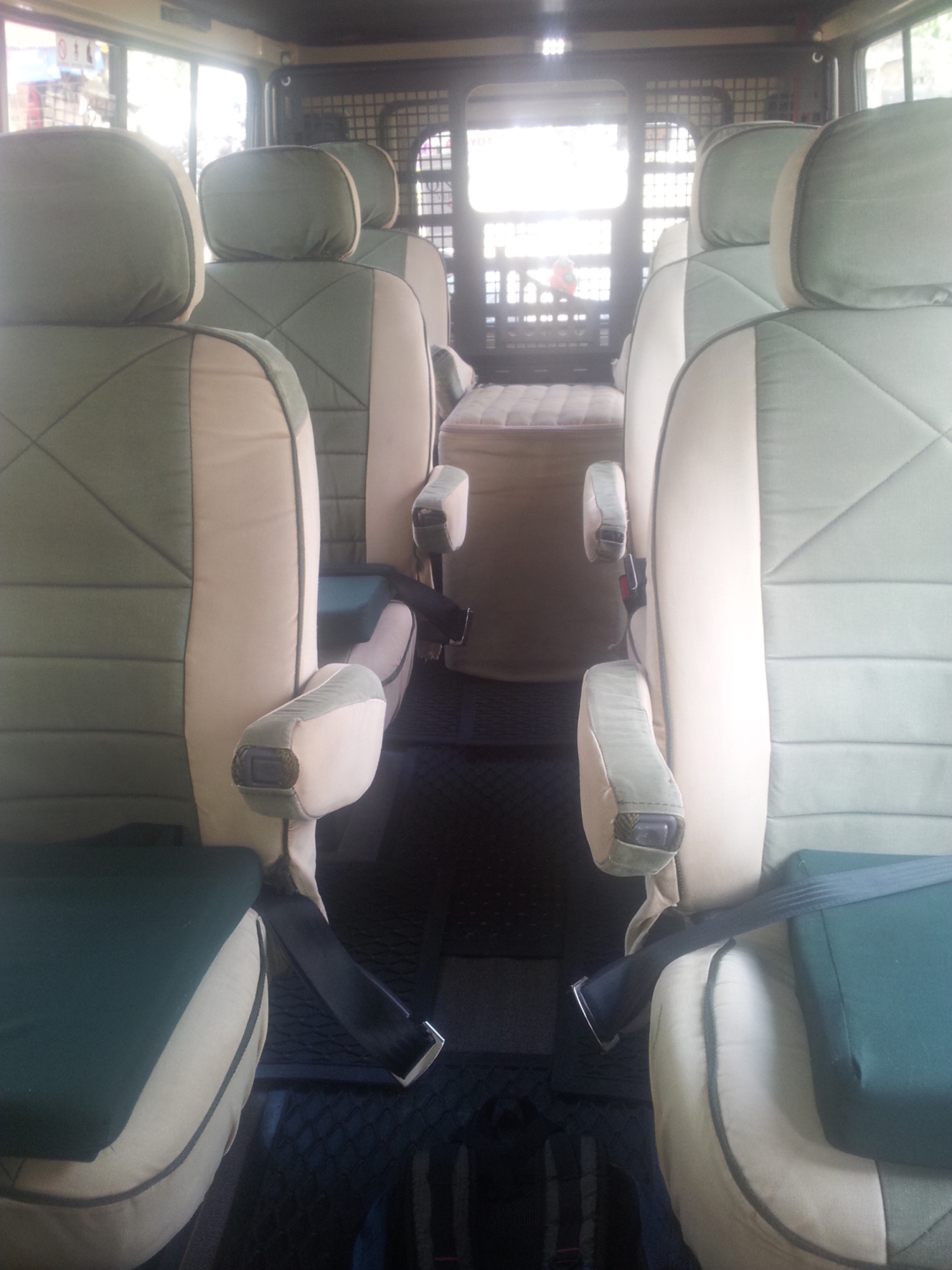
Our seven-seats Land cruiser inside & outside
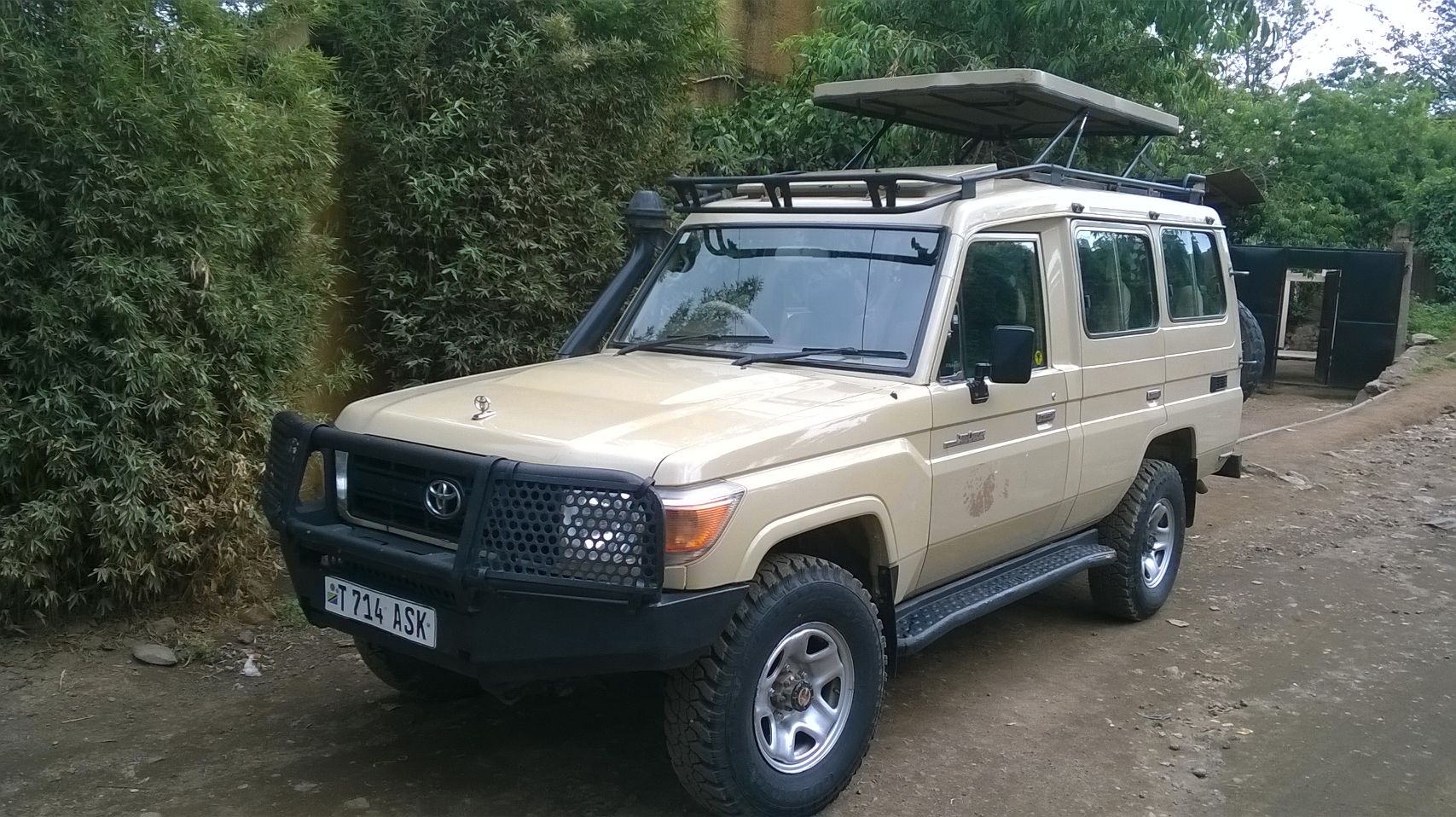
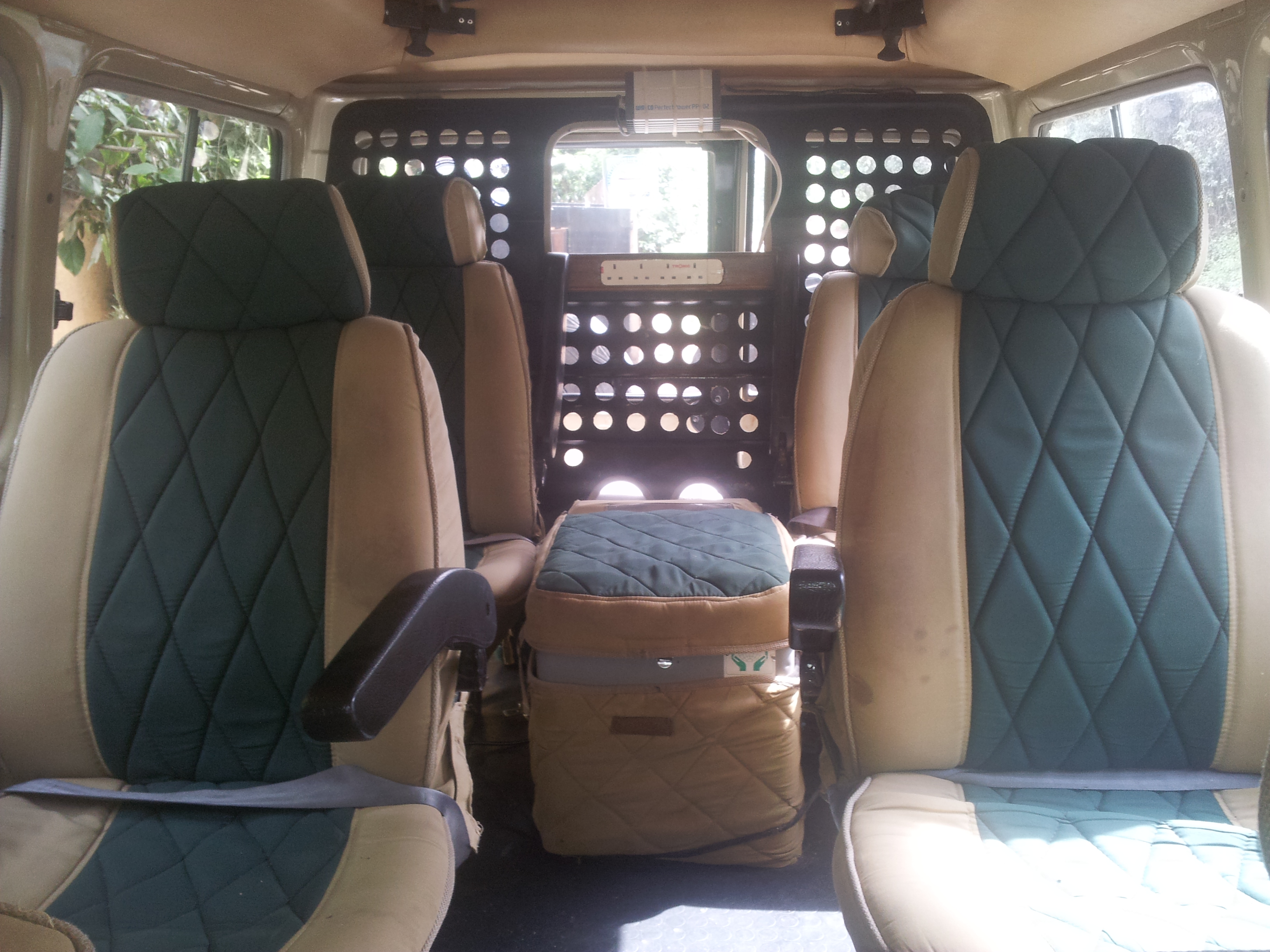
Our five-seats Land cruiser inside and outside
Best Overview & Insight for Tanzania Safari Cars
The most common and highly recommended Tanzania safari vehicles are rugged 4×4 Toyota Land Cruisers, often customized specifically for safari use. These vehicles dominate the market because of their exceptional durability, off-road capability, and reliability in handling Tanzania’s diverse and challenging terrains—from the dusty roads of the Serengeti and Tarangire to the rocky paths of Ngorongoro Crater and other national parks.
Why Toyota Land Cruiser is the Top Choice
- It’s widely regarded as the “King of Safari Vehicles” in East Africa due to its ability to tackle rough, unpaved tracks, mud, steep inclines, and river crossings.
- Operators praise its shock absorption for smoother rides on bumpy roads, spacious interiors, and modifications like reinforced frames and enhanced suspension.
- Most reputable safari companies (e.g., Back to Africa Safaris, Safari desire Adventures, and others) exclusively use modified Toyota Land Cruisers, often imported and customized by specialists.
Main Types of Safari Vehicles in Tanzania
- Pop-Top (or Pop-Up Roof) Land Cruiser — The standard for most road-based safaris
- These are closed-sided vehicles (with windows and doors for protection from dust, sun, rain, or wind) but feature a pop-up roof that lifts for 360-degree standing views and photography during game drives.
- Typically seats 4–7 passengers (often limited to 6 for comfort, with guaranteed window seats in premium setups).
- Ideal for driving between parks/lodges on public roads (where fully open vehicles may not be allowed) and national parks.
- Provides good protection while still offering excellent wildlife viewing—most travelers find this the best balance of comfort and functionality.
- Standard/Closed Land Cruiser (with pop-up roof)
- Similar to the above, often with extras like air-conditioning, charging ports, fridges, and comfortable seating (sometimes upgraded Volvo seats for lumbar support).
- Great for long drives and variable weather.
- Open-Sided (or Side-Canvas/Open Safari) Land Cruiser
- Fully or partially open sides (no windows/doors, just a canvas roof or awning for sun protection).
- Tiered seating for better visibility, unobstructed photography, and an immersive experience (feeling closer to wildlife).
- Commonly used in fly-in safaris (where you arrive by small plane and stay in remote camps) or within certain private/conservancy areas.
- Not always permitted on public roads or in some parks, so they’re often switched to at camps.
- Other Options (less common)
- Land Rover Defender — A sturdy alternative in some operators’ fleets, similar in capability but less ubiquitous than the Land Cruiser.
- Minivans or smaller vehicles — Cheaper/budget options for group tours, but they handle rough terrain poorly and offer less comfort/off-road access—avoid for serious safaris.
Key Features to Look for in a Good Tanzania Safari Vehicles
- 4×4 capability (mandatory for national parks per Tanzania regulations).
- Unlimited mileage (many top operators offer these so guides can follow wildlife without restrictions).
- Custom modifications — Roof hatches, raised seating, fridges, power outlets, and good suspension.
- Group size — Private vehicles (4–6 people max) are ideal for flexibility and better views; shared vehicles are more budget-friendly but can feel crowded.
For the best experience in Tanzania’s parks like Serengeti, Ngorongoro, Tarangire, or Ruaha, opt for a reputable tour operator using well-maintained Toyota Land Cruisers with pop-up roofs. If you’re a serious photographer or want maximum immersion, inquire about open-sided or side-canvas options where available (often in luxury/fly-in itineraries).
If you’re planning a trip, consider your itinerary—road-based tours favor pop-top closed Tanzania safari vehicles, while luxury fly-in camps often include open-sided ones for game drives.
Best Time for Tanzania Safari with Good Road Condition
The best time to visit Tanzania for a safari, especially when prioritizing friendly roads suitable for a Land Cruiser (or similar 4×4 vehicle), is during the dry season from June to October.
This period offers the optimal combination of excellent wildlife viewing, comfortable weather, and the most reliable road conditions in national parks like Serengeti, Ngorongoro Crater, Tarangire, and Lake Manyara.
Why June to October?
Road conditions — The dry weather means tracks and dirt roads in the parks stay firm, with minimal mud, ruts, or flooding. This makes driving (or being driven) in a Land Cruiser much easier, safer, and more enjoyable. Self-drive or guided safaris face far fewer accessibility issues compared to wet periods, when heavy rains can make many roads impassable or require detours.
Wildlife viewing — Animals concentrate around remaining water sources (rivers, waterholes), making them easier to spot. Vegetation is thinner and less lush, improving visibility. This is peak season for the Great Wildebeest Migration in the Serengeti, including dramatic Mara River crossings (especially July–September/October).
Weather — Sunny days, low humidity, cooler nights (pack layers for early morning/evening game drives), and daytime temperatures typically 25–30°C (77–86°F). Rain is rare, reducing dust issues later in the season.
Overall safari experience — This is high/peak season, so expect more visitors (especially July–August), higher prices, and the need to book well in advance. But the reliable conditions make it ideal for first-timers or those wanting hassle-free road travel.
Month-by-Month Highlights (Dry Season Focus)
June — Start of dry season; migration begins moving north; good wildlife, fewer crowds than peak months.
July–September — Peak of the dry season and migration drama (river crossings in northern Serengeti); excellent road access; busiest and priciest.
October — Still very dry and great for viewing; migration winds down; slightly fewer crowds and sometimes better value than mid-summer.
Other Seasons to Consider (for Road-Friendly Safaris)
November–December (short rains) — Occasional showers, greener landscapes, baby animals, fewer crowds, and lower prices. Roads are generally still manageable in a Land Cruiser, but expect some mud in spots—still friendlier than the long rains.
January–February/March — Calving season in southern Serengeti (thousands of baby wildebeest, predator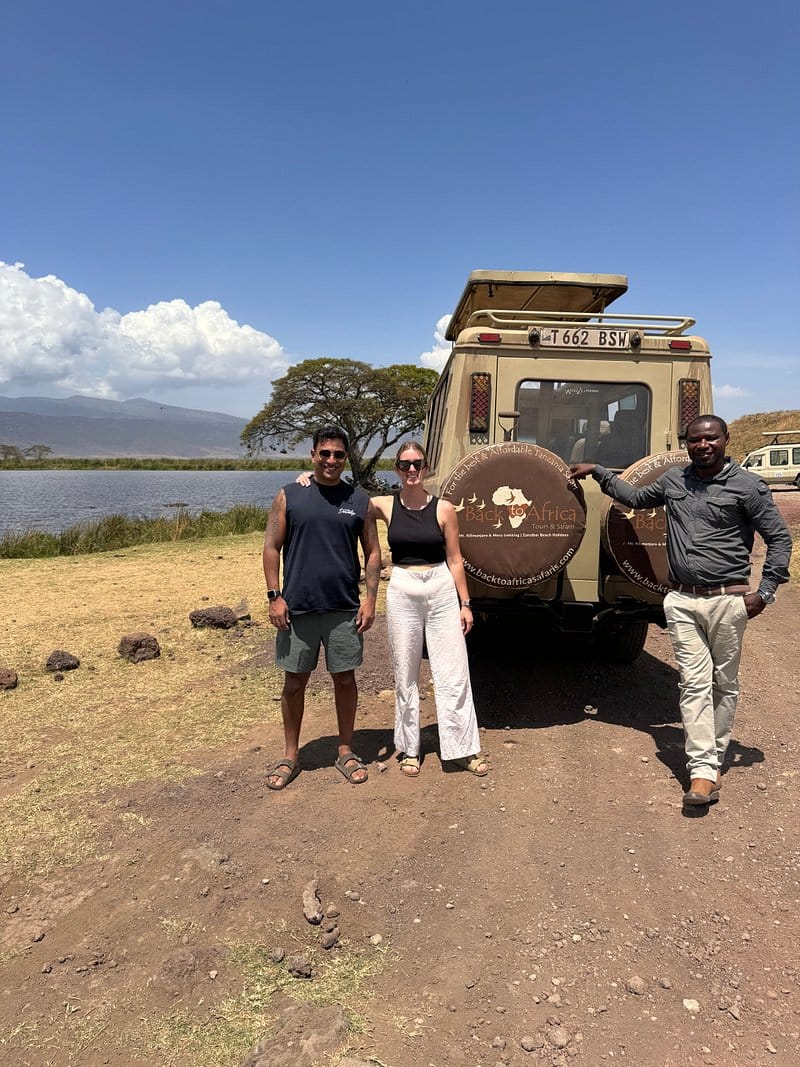 action); lush scenery. Roads can be dustier or occasionally wet, but often drivable.
April–May (long rains) — Avoid for road-based safaris. Heavy downpours turn many park tracks into mud bogs, making travel difficult or impossible in a Land Cruiser without experienced drivers/guides. Some camps close, and access relies more on flights.
For the “friendliest” safari roads in a Land Cruiser—meaning smoother, drier, and more predictable driving—stick to June through October. If you’re flexible and want fewer crowds/lower costs, late October or early November can still offer good conditions before the short rains intensify.
Always check current weather and park updates closer to your trip before chosing your Tanzania Safari vehicles, as climate patterns can shift slightly year to year. Book with a reputable operator for guided drives if you’re not self-driving!